Little Rocket Lab – How to Build, Automate, and Launch a Successful Space Program

Little Rocket Lab is a charming automation and management game centered around building rockets, managing production, transporting resources, and expanding a growing space-focused operation. Instead of simply constructing a rocket and launching it, you must develop the infrastructure that makes reliable launches possible.
Success depends on understanding how resources move through your production network. Raw materials need to be gathered, processed, transported, and transformed into increasingly advanced components. As your operation expands, efficient layouts and automation become essential for keeping production running smoothly.
Whether you are beginning your first production line or working toward more ambitious rocket projects, a structured approach can make progression much easier. This guide explains how to establish your base, gather resources, organize production, automate important processes, manage transportation, research technology, and build an efficient long-term operation in Little Rocket Lab.
1. How to Start Your First Production Base
The early game should focus on establishing a reliable foundation rather than attempting to build an enormous production network immediately. Begin by completing the introductory objectives and learning how resources, buildings, transportation, and production chains interact.
Explore the surrounding environment and identify the resources that will support your initial projects. Understanding where materials come from is important because future production chains will depend on a steady supply of basic resources.
During the opening stages, prioritize essential infrastructure such as:
- Basic resource collection
- Initial processing facilities
- Storage
- Transportation routes
- Early production buildings
- Essential research or upgrades
Keep your first layout relatively simple. You will unlock more advanced machinery later, and leaving some space around your initial production area makes future expansion much easier.
2. How to Gather and Manage Resources Efficiently
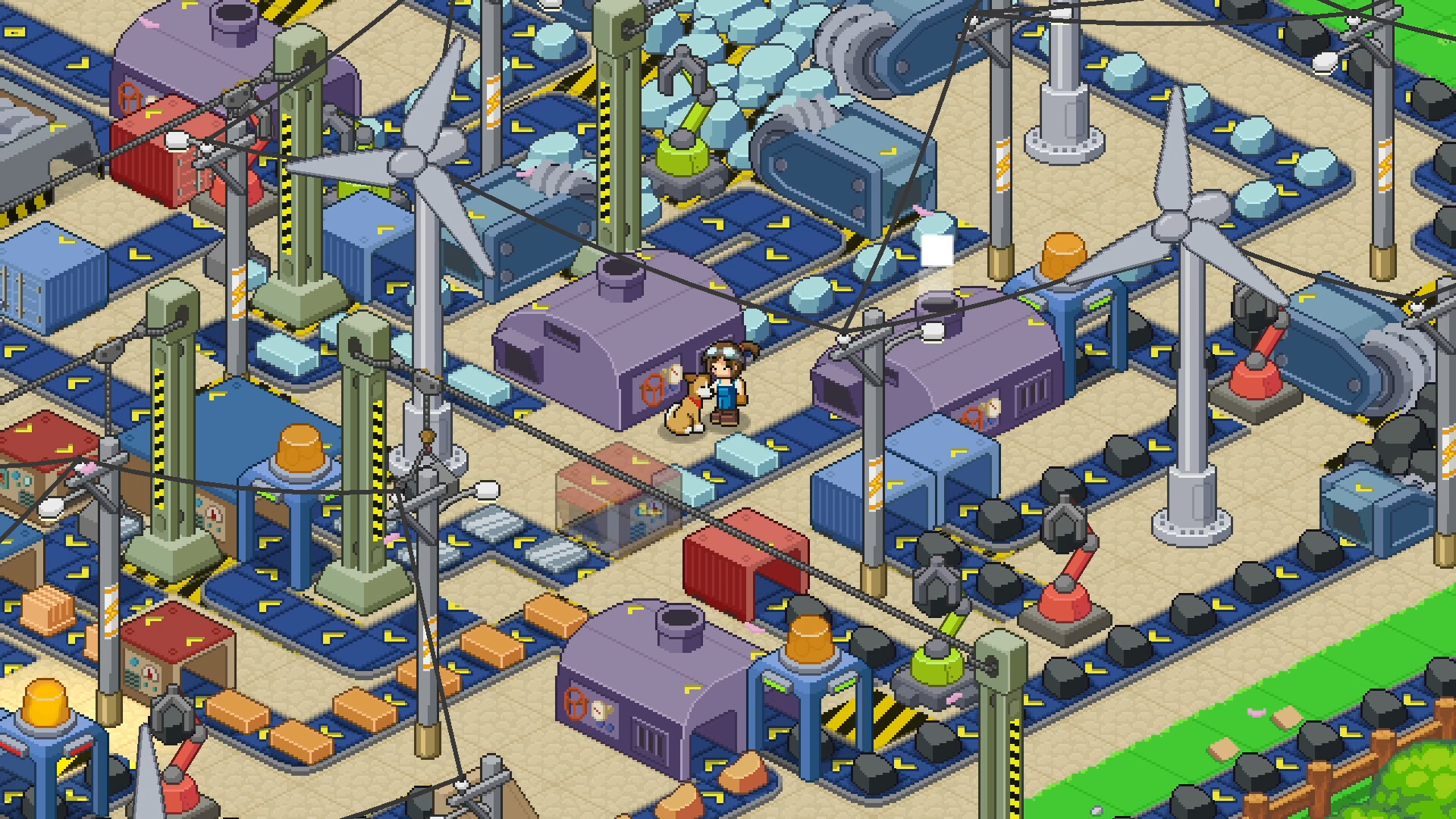
Resources are the foundation of every production chain. Before constructing an advanced component, determine which raw materials are required and where they can be obtained. This prevents you from building production facilities that cannot operate because an earlier resource is missing.
Resource management becomes easier when materials are handled in batches. Instead of constantly moving small quantities between locations, establish dependable routes that continuously transport materials to the appropriate processing buildings.
Storage also deserves attention. If production stops because a storage area is full or a required component cannot be delivered, the entire chain can slow down. Keep frequently used resources accessible while avoiding unnecessary stockpiles of materials that are not currently needed.
A good resource-management routine is:
- Identify the next production requirement.
- Locate the necessary raw materials.
- Establish a steady supply.
- Process materials near their intended production chain.
- Store important intermediate components.
- Expand supply when production begins to outgrow it.
This approach keeps your operation stable as the complexity of your factory increases.
3. How to Design Efficient Production Lines
Production chains are at the heart of Little Rocket Lab. Basic materials may need to pass through several stages before becoming useful rocket components, so the placement of production buildings matters.
Whenever possible, organize production in a logical sequence. Raw resources should enter the first processing stage, intermediate materials should move to the next stage, and finished components should eventually reach storage or assembly facilities.
Avoid creating unnecessarily complicated transportation routes. Long-distance movement between every stage can increase congestion and make your factory harder to understand. A compact production area with clearly defined inputs and outputs is easier to expand and troubleshoot.
You can organize your factory around several categories:
- Raw resource processing
- Intermediate component production
- Advanced manufacturing
- Rocket component assembly
- Storage and distribution
As your technology advances, you can gradually redesign older production areas rather than allowing inefficient early-game layouts to remain permanently.
4. How to Automate Repetitive Production
Automation becomes increasingly important as your production network grows. Manually handling every resource might work when your operation is small, but it becomes inefficient once multiple production chains are running simultaneously.
Identify repetitive tasks that consume significant amounts of time and look for ways to automate them. Automated transportation and production systems can keep resources moving while you focus on expansion, exploration, research, or rocket development.
When building automated systems, think about the entire chain rather than one machine at a time. A highly efficient processor is not useful if the building constantly runs out of input materials or has nowhere to send its output.
Before automating a production line, check:
- Where the input comes from
- How frequently it is supplied
- Where the output goes
- Whether storage has enough capacity
- Whether transportation can handle the workload
- Which stage is currently limiting production
The goal is not simply to automate everything. The goal is to create production systems that operate reliably with minimal intervention.
5. How to Manage Transportation and Factory Logistics
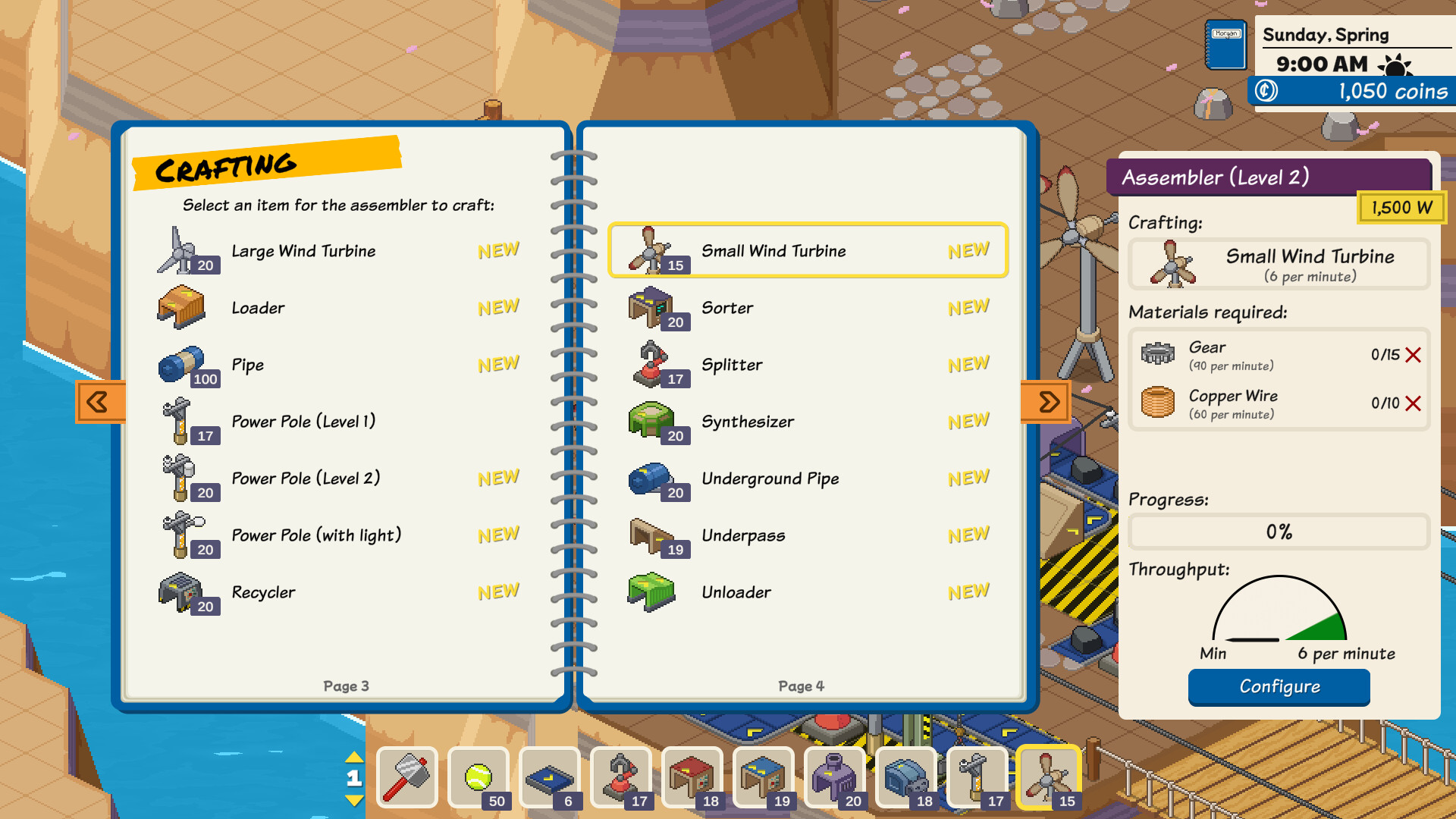
Transportation connects your entire operation. Even when every individual production building is working correctly, poor logistics can prevent the overall system from functioning efficiently.
Plan transportation routes according to the flow of materials. Resources should move naturally from extraction to processing, then toward manufacturing and finally toward storage or assembly.
Try to avoid unnecessary intersections and long routes when possible. If several production lines depend on the same transportation network, monitor them for potential bottlenecks.
It is also useful to keep related facilities relatively close together. For example, processing buildings that frequently exchange materials should not be separated by large distances unless there is a specific reason for doing so.
A well-designed logistics network should provide:
- Shorter transportation routes
- Consistent material delivery
- Easy access to storage
- Less congestion
- Room for additional production
Good logistics become especially important when rocket manufacturing requires multiple components simultaneously.
6. How to Build Better Rocket Components
Rocket construction represents one of the major goals of your industrial progression. However, advanced rocket components depend on the production systems you establish earlier.
Instead of focusing exclusively on the final rocket, work backward from the component you need. Determine which intermediate products are required, then identify the resources and machines necessary to produce them.
This reverse-planning method helps reveal missing links in your production network. If an advanced component cannot be manufactured, the problem may not be with the final assembly facility. The real bottleneck could be a basic material several stages earlier.
Before beginning a major rocket project, make sure you have:
- Stable raw-material production
- Sufficient processing capacity
- Reliable intermediate components
- Adequate storage
- Efficient transportation
- Enough manufacturing capacity
Once these systems are established, rocket production becomes much more predictable.
7. How to Research and Unlock New Technology
Research and technological progression provide access to more advanced production capabilities. New technologies can increase efficiency, unlock new components, and open additional opportunities for expansion.
Avoid researching upgrades without considering how they fit into your current operation. A technology may be powerful but have limited immediate value if your factory is still struggling with basic resources.
Instead, prioritize research that addresses your biggest limitation. If production is slow, focus on technologies that improve manufacturing. If transportation is causing delays, prioritize logistics-related improvements. If advanced rocket construction is your next objective, concentrate on technologies that unlock the required components.
A useful research cycle is:
- Identify your current bottleneck.
- Determine whether technology can solve it.
- Research the relevant upgrade.
- Integrate the new technology into your factory.
- Measure the improvement.
- Move to the next limitation.
This keeps technological progression connected to actual production needs.
8. How to Expand Your Operation Without Creating Bottlenecks
Expansion should happen gradually. Building additional facilities may increase theoretical production capacity, but if transportation, raw materials, or storage cannot support them, the extra buildings will not provide their full value.
Before expanding a production chain, examine the entire network. If one machine is operating at full capacity while another is frequently idle, increasing the output of only one side will not necessarily improve the final result.
Look for bottlenecks by observing where production stops or materials accumulate. A growing pile of processed resources may indicate that the next production stage is too slow. Conversely, an empty production facility may indicate that its input supply is insufficient.
Use expansion to solve specific problems:
- Increase extraction when raw materials are insufficient.
- Increase processing when resources accumulate.
- Improve transportation when deliveries are delayed.
- Expand storage when inventories are frequently full.
- Add manufacturing capacity when final components are slow to produce.
This targeted approach prevents unnecessary construction and keeps the factory easier to manage.

9. How to Prepare for Major Rocket Projects
Large rocket projects require coordination between many parts of your industrial system. Starting the final construction too early can expose weaknesses in your supply chain and cause long production delays.
Before committing to a major project, review your entire production network. Check whether every required component can be produced consistently rather than relying on occasional batches.
Create reserves of important materials when practical. Having additional components available can protect the project from temporary interruptions elsewhere in the factory.
It is also useful to separate normal production from major project production. If possible, dedicate certain facilities or storage areas to important rocket components so that everyday manufacturing does not consume resources needed for the launch project.
A strong preparation checklist includes:
- Confirming every required component
- Checking raw-resource availability
- Reviewing production capacity
- Ensuring transportation is reliable
- Preparing sufficient storage
- Identifying potential bottlenecks
- Reserving critical materials
The more preparation you complete before construction begins, the smoother the final assembly process becomes.
10. How to Build an Efficient Long-Term Space Operation
Once your production network becomes established, the focus should shift toward optimization. Your factory should not simply produce enough resources to complete one objective; it should be capable of supporting increasingly complex projects without constant manual intervention.
Review older production areas and identify systems that have become inefficient. Early-game layouts are often designed around limited technology, while later upgrades may allow you to simplify or reorganize them.
Long-term efficiency comes from connecting your entire operation into a reliable cycle. Resources should move from extraction to processing, manufacturing should transform them into useful components, logistics should distribute those components, and advanced facilities should support larger objectives.
Keep these principles in mind:
- Build with future expansion in mind.
- Keep production chains organized.
- Automate repetitive tasks.
- Reduce unnecessary transportation.
- Maintain useful resource reserves.
- Upgrade bottlenecks before expanding randomly.
- Reorganize outdated production lines.
- Leave space for advanced facilities.
Most importantly, do not be afraid to rebuild. Improving an inefficient factory is part of the experience, and a redesigned production network can dramatically improve the efficiency of everything that follows.
Conclusion
Little Rocket Lab combines resource management, factory automation, logistics, research, and rocket construction into a progression system where every part of your operation supports the next. The key to success is understanding the relationship between raw resources, production chains, transportation, automation, and advanced manufacturing.
Start with a compact and reliable base, then gradually develop your resource supply and production infrastructure. Organize factories around logical material flows, automate repetitive tasks, and constantly watch for bottlenecks. As new technologies become available, use them to improve existing systems rather than simply adding more buildings.
With careful planning, your small operation can evolve into an efficient industrial network capable of producing increasingly advanced rocket components. The most successful approach is to expand deliberately, optimize continuously, and build every part of your operation with future projects in mind.