The Spatial Memorization Crisis and the Procedural Generation Dilemma in Mimic Party
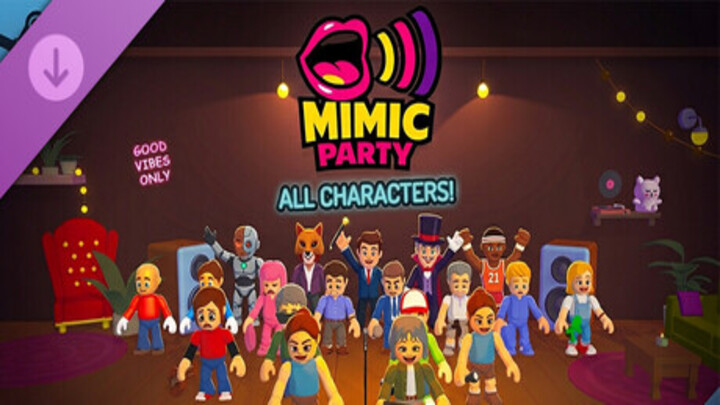
When Mimic Party first launched, it was hailed as a revolutionary step forward in the asymmetrical multiplayer and social deduction genres. Players were tossed into beautifully crafted, static environments where they had to blend in seamlessly with their surroundings to avoid detection by the hunters. However, beneath the surface of this seemingly perfect game of hide and seek lay a fundamental flaw that would eventually fracture the player base and force the developers into a corner. This article delves deeply into the most pressing and complex issue the game has faced throughout its lifespan, which is the spatial memorization crisis and the controversial implementation of procedural generation. We will explore how this single issue evolved over time, altering the psychological dynamics of the game and transforming it from a casual party experience into a highly competitive and often frustrating battle of memory and mechanics.
The Launch Window and the Illusion of Deception
During the initial months following the release of Mimic Party, the gameplay loop functioned exactly as the developers had intended. Players taking on the role of the mimic felt genuine terror and excitement as they carefully positioned themselves in living rooms, offices, and outdoor gardens. The primary skill involved was psychological deception. A mimic had to ask themselves if a coffee cup truly belonged on the floor next to a sofa, or if a potted plant looked natural slightly skewed in a corner. It was a game of logic, creativity, and blending into the natural aesthetic of the beautifully rendered static maps.
The hunters, on the other hand, relied heavily on their intuition and general observational skills. They would sweep through rooms, shooting or striking objects that simply felt out of place. This created a beautiful synergy where both roles were playing a mental game against one another. The hunters were checking for logical inconsistencies, and the mimics were attempting to construct flawless visual lies. Nobody knew the maps perfectly, which meant that every single match felt fresh, unpredictable, and entirely dependent on the moment to moment decisions made by the players involved.
However, this golden age of pure deception was doomed to be incredibly short lived. Because the maps were entirely static and the object layouts were fixed in every single round, the foundation of the game was essentially a ticking time bomb. It was only a matter of time before the player base stopped playing a game of psychological deduction and started playing a game of simple rote memorization.
The First Metagame Shift and the Pixel Perfect Problem
By the third month of the game being live, a massive shift occurred in how veteran players approached the game. Instead of looking for objects that seemed logically out of place, high level hunters simply began memorizing the exact layout of every single room in the game. This was referred to by the community as the pixel perfect problem. A veteran hunter could walk into the library map and instantly know that there were supposed to be exactly fourteen books on the left shelf and three chairs around the central table. If there were fifteen books or four chairs, they did not need to use any deduction. They just immediately attacked the extra object.
This fundamentally broke the core loop for the mimics. It no longer mattered how perfectly you positioned yourself or how logically sound your hiding spot was. If you were an extra object in a room that a hunter had memorized, you were going to be found immediately. The psychological aspect of the game was entirely stripped away, replaced by a cold, mathematical approach to map clearing. Mimics found themselves dying within the first thirty seconds of a match simply because they chose to hide in a room where the hunter knew every single default object by heart.
The Rise of Competitive Mapping Tools
To make matters worse, the competitive community began developing and sharing external resources to optimize their hunting routes. Players created highly detailed top down maps that cataloged every single prop, its exact coordinate, and its default rotation angle. These mapping tools were distributed across forums and communication platforms, allowing even moderately skilled players to study the maps perfectly before they even booted up the game.
The Standardization of Sweeping
This led to the standardization of sweeping routes. Hunters would follow mathematically optimized paths through the maps, spamming their attacks at any location where an extra pixel appeared. The game stopped being about hunting and started being about speedrunning a visual checklist. The joy of the hunt was entirely replaced by the robotic efficiency of memory recall.
The Casual Player Exodus of the First Year
As the metagame shifted entirely toward spatial memorization, the game became incredibly hostile to new and casual players. A new player booting up Mimic Party for the first time would attempt to play the game as it was advertised. They would find a clever spot, rotate their prop to look perfectly natural, and wait with bated breath. Inevitably, a veteran hunter would sprint into the room, ignore all context, and immediately eliminate them because they were the extraneous object in a memorized room.
This created a massive retention problem for the developers. The gap between veteran players and new players became insurmountable. You could not outsmart a hunter who had the map memorized, which meant that the only way to survive as a mimic was to also memorize the maps and understand exactly which microscopic corners were outside of the standard sweeping routes. Casual players, who simply wanted a fun party game to play on the weekends, were slaughtered endlessly without ever understanding what they did wrong.
The community forums were flooded with complaints from new players who felt that the game was entirely unfair. They argued that the hunters must be using cheats or external software to find them so quickly. In reality, the hunters were just using their extensively trained memory. This exodus of casual players forced the developers to acknowledge that their static map design was actively killing the longevity of their game, leading to the most controversial update in the history of Mimic Party.
The Procedural Generation Update
Approaching the one year anniversary of the game, the developers released a massive patch that fundamentally altered the underlying infrastructure of Mimic Party. They introduced a procedural generation system for all of the props and furniture within the static map boundaries. While the walls and floors remained the same, the internal contents of every room were randomly seeded at the start of every single match. A room might have a desk and two chairs in one round, and a bookshelf with a pile of boxes in the next.
The intention behind this update was noble. The developers wanted to destroy the map memorization meta and force players to return to the psychological deduction that made the game so popular at launch. By making it impossible to memorize the room layouts, hunters would once again have to rely on their intuition and logical reasoning to find the mimics. At first glance, this seemed like the perfect solution to the spatial memorization crisis.
However, introducing procedural generation to a game entirely based on precise visual information is an incredibly dangerous balancing act. The community immediately realized that the procedural generation algorithm was heavily flawed. Instead of restoring the natural balance of the game, the update introduced a host of new, deeply frustrating issues that completely changed how both roles had to play.
The Unintended Consequences of Algorithmic Clutter
The primary issue with the new procedural generation system was algorithmic clutter. Because the game was randomly placing objects within a designated space, it often created scenarios that made absolutely no logical sense. A toilet might spawn in the middle of a kitchen, or a television might spawn facing directly into a wall. The natural, lived in aesthetic of the maps was entirely destroyed, replaced by a chaotic mess of random assets scattered haphazardly across the environment.
The Loss of Logical Deduction
This chaotic spawning completely ruined the logical deduction aspect for the hunters. Previously, a hunter could look at a coffee cup on the floor and deduce that it was a mimic because coffee cups belong on tables. But with the procedural generation algorithm actively placing standard props in ridiculous locations, the hunters could no longer trust their own logic. If the game itself was placing toilets in the kitchen, how could a hunter possibly tell the difference between bad procedural generation and a badly hidden mimic?
This led to a new kind of frustration. Hunters felt that they were no longer being outsmarted by clever players, but rather being tricked by the developers flawed coding. They were forced to shoot everything in the room because the baseline logic of the environment had been completely shattered. Mimics, conversely, found that they could hide in plain sight as the most absurd objects in the most absurd locations, and the hunters would often ignore them simply because they assumed it was a glitch in the random generation.
The Physics Engine Rebellion and Prop Clipping
Beyond the logical inconsistencies, the procedural generation system wreaked havoc on the games physics engine. Props were frequently spawned overlapping with one another, causing bizarre visual clipping and physics glitches. A chair might spawn halfway inside a solid wall, vibrating violently as the physics engine tried to resolve the collision.
Mimics quickly learned to weaponize these physics glitches. By intentionally wedging themselves into solid walls or overlapping with procedurally generated objects, they could make themselves completely untouchable. The hitboxes became corrupted, meaning that hunters could swing their weapons directly at a mimic and register zero damage because the game thought the mimic was safely behind a solid wall.
The developers found themselves playing an endless game of whack a mole. Every time they patched the algorithm to prevent props from spawning inside walls, players would find a new way to exploit the procedural generation to break their hitboxes. The game devolved into a technical mess, where the winner of a match was usually the player who best understood how to exploit the broken physics engine rather than the player who was best at hiding or hunting.
The Evolution of the Aggressive Mimic Playstyle
As the procedural generation system continued to create chaotic and unpredictable environments, veteran mimics realized that staying perfectly still was no longer the optimal strategy. Because hunters were forced to check everything in the room due to the lack of environmental logic, stationary mimics were eventually going to be found. This realization birthed the aggressive mimic playstyle, a meta that completely flipped the game on its head.
Instead of hiding, high level mimics began using small, highly mobile props to actively harass and disorient the hunters. A player would turn into a tiny soda can and continuously jump around the room, dodging attacks and using the chaotic procedurally generated clutter as a shield. Because the rooms were so densely packed with randomly placed objects, hunters found it incredibly difficult to track small, fast moving targets.
The Stun Mechanic Exploitation
This aggressive playstyle was further amplified by the mimics ability to briefly stun hunters by throwing objects or colliding with them at high speeds. Mimics stopped trying to survive the timer by hiding and started trying to survive the timer by actively fighting back. A group of coordinated mimics could endlessly stun lock a hunter, bouncing off their head as assorted small objects until the match timer expired. The game transitioned from a tense game of hide and seek into an absurd, high speed platforming brawler.
The Stagnation of the Competitive Meta
By the second year of the games life cycle, the competitive meta had entirely stagnated around this aggressive, high mobility playstyle. The original vision of Mimic Party was completely dead at the highest levels of play. Tournaments and ranked matches consisted entirely of tiny props doing parkour around frustrated hunters.
The developers were trapped. If they nerfed the movement speed of the props to force them to hide, the mimics would simply be slaughtered by hunters due to the issues with the procedural generation. If they removed the procedural generation and went back to static maps, the game would immediately revert to the spatial memorization crisis that caused the casual players to leave in the first place. There was no easy mathematical solution to this problem because the issue was rooted in the fundamental psychology of how players consume and optimize competitive games.
To try and fix this, the developers introduced stamina bars for the mimics, limiting their ability to constantly run and jump. While this slowed the game down slightly, it did not solve the core issue. The mimics just became more strategic about when they used their bursts of speed, essentially turning the game into an exercise in cooldown management rather than environmental deception.
The Psychological Burden of the Hunter Role
As the aggressive mimic meta solidified, a strange psychological phenomenon began to occur within the player base. The paranoia and anxiety that was originally meant to be felt by the mimics was entirely transferred to the hunters. Playing as a hunter became an incredibly stressful and visually exhausting experience.
Hunters were required to enter a room, instantly process a chaotic mess of procedurally generated garbage, attempt to apply logic to an illogical algorithm, and then try to track microscopic, high speed objects bouncing off the walls. The sensory overload was immense. Many players outright refused to play the hunter role, preferring to take the penalty for leaving a match rather than subject themselves to the headache of chasing soda cans through a labyrinth of glitching furniture.
This created a massive matchmaking imbalance. The queue times for players who wanted to be mimics skyrocketed because nobody was willing to play the hunter role. The developers had to implement massive experience and currency incentives just to bribe people into playing as the hunters, which only served as a band aid over a deeply rooted design flaw. The hunters were no longer the power fantasy role they were designed to be. They were the victims of a chaotic system that heavily favored the mobility and small hitboxes of the mimics.
The Ongoing Search for Asymmetrical Balance
Today, Mimic Party stands as a fascinating case study in the dangers of asymmetrical game design and the unpredictable nature of player optimization. The development team is currently in the process of testing a hybrid system, attempting to find a middle ground between static memorization and procedural chaos.
The new proposed system uses predetermined logical zones. Instead of placing objects entirely randomly, the algorithm selects from a curated list of logical configurations for specific areas. A kitchen counter might randomly choose between a coffee maker setup, a cutting board setup, or a dirty dishes setup. This ensures that the environment always makes logical sense, restoring the deduction aspect for the hunters, while still providing enough variance to prevent perfect pixel memorization.
Here is a list of the key changes proposed in the hybrid system.
- Logical prop grouping to prevent random items spawning in incorrect rooms.
- Fixed collision boundaries to eliminate physics engine exploitation and clipping.
- Diminishing returns on mimic movement speed to discourage endless parkour.
- A refined hunter vision mechanic that highlights logical inconsistencies based on the room type.
Whether this hybrid system will finally solve the spatial memorization crisis without falling back into the pitfalls of algorithmic clutter remains to be seen. What is undeniable, however, is that Mimic Party has fundamentally changed how we understand the lifecycle of social deduction games. It proves that no matter how perfectly a game is designed around human psychology and deception, players will always find a way to reduce that magic into a cold, optimized mathematical equation.
The journey of Mimic Party from a casual game of hide and seek to a complex battle against procedural algorithms is a testament to the dedication of its community and the resilience of its developers. As the game continues to evolve, it will undoubtedly provide even more valuable lessons on the fragile balance of asymmetrical multiplayer game design.