Mimic Party – A Complete Guide to Gameplay, Features, Strategy, and Fun

Mimic Party is the kind of game that turns a simple idea into a chaotic social experience. Rather than relying only on traditional combat or complicated progression systems, the game focuses on interaction, deception, observation, quick reactions, and the unpredictable behavior that naturally appears when several players compete or cooperate together. Every round can develop differently, making the experience particularly appealing to players who enjoy party games and multiplayer challenges.
The appeal of Mimic Party comes from its accessible concept. Players can quickly understand the basic objective, but becoming consistently successful requires considerably more awareness and communication. You may need to imitate behavior, recognize suspicious actions, react quickly to changing situations, or figure out what another player is attempting to accomplish. This mixture of simple rules and unpredictable player behavior creates plenty of opportunities for funny moments and unexpected outcomes.
For players searching for a new multiplayer party experience, Mimic Party offers an interesting combination of casual entertainment and competitive decision-making. This guide explores what makes the game enjoyable, how its core mechanics work, what beginners should know, and how experienced players can improve their performance.
1. What Is Mimic Party?
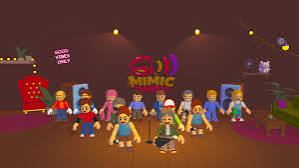
Mimic Party is designed around the idea of social interaction and unpredictable multiplayer gameplay. The central concept is easy to understand: players participate in party-style challenges where observation, imitation, timing, and reactions can determine the outcome.
Unlike games that require players to memorize complicated controls before they can have fun, a party-focused experience such as Mimic Party is easier to approach. New players can generally concentrate on understanding what is happening around them instead of learning an extensive set of systems.
The game's identity is also closely connected to its social atmosphere. A successful round is not necessarily about having the strongest character or the most advanced equipment. Instead, players may need to understand other participants and respond to what they do.
A Game Built Around Interaction
The most interesting part of Mimic Party is the unpredictability created by human players. A strategy that works against one opponent may fail completely against another because people react differently under pressure.
This gives the game a strong social component. Players can make mistakes, intentionally mislead others, react unexpectedly, or create situations that nobody anticipated.
That unpredictability is one of the reasons party games can remain entertaining even after players understand the basic rules.
2. Getting Started With Mimic Party
The first few rounds of Mimic Party are best approached as an opportunity to learn rather than an attempt to win every challenge. New players should pay attention to the objective of each activity and observe how other participants behave.
Before focusing on advanced strategies, become comfortable with the basic controls and movement. Understanding how quickly your character responds is especially important when challenges require precise timing.
Beginner Priorities
When starting Mimic Party, focus on:
- Learning the basic controls
- Understanding each round's objective
- Watching other players
- Recognizing repeated patterns
- Practicing movement and reactions
- Learning how different challenges work
- Avoiding unnecessary risks
One of the most useful habits is to observe before acting. In a social game, immediately reacting to everything can sometimes make your intentions obvious.
Don't Worry About Losing Early
Party games are often most enjoyable when players treat failure as part of the experience. Losing a round can reveal useful information about timing, rules, or opponent behavior.
Instead of becoming frustrated after an unsuccessful attempt, ask what caused the mistake. Was the timing wrong? Did another player predict your action? Did you misunderstand the objective?
Each answer can improve your performance in the next round.
3. Understanding the Core Gameplay
The gameplay of Mimic Party revolves around short interactions and challenges rather than lengthy individual sessions. This structure makes the game suitable for players who want entertainment without committing to a long campaign.
The exact experience can change depending on the challenge and the behavior of the players involved. Some situations may reward quick reactions, while others may require patience and observation.
Observation Is a Major Skill
A player who pays attention can often identify useful information before making a move.
Watch for:
- Repeated movements
- Unusual positioning
- Predictable reactions
- Players who constantly follow others
- Sudden changes in behavior
- Patterns that occur between rounds
These details can become important when the game asks you to identify, imitate, or predict actions.
Timing Matters
Good timing is often more valuable than simply acting quickly. Moving too early can expose your intentions, while waiting too long can cause you to miss an opportunity.
Learning when to act and when to wait is one of the skills that separates casual players from more experienced participants.
4. Mimic Mechanics and Deception
The concept suggested by the name Mimic Party naturally places emphasis on imitation. Mimicry can be useful because it allows players to blend into a situation, create uncertainty, or respond to another player's behavior.
However, copying another player without understanding why they are acting a certain way can be dangerous. Experienced opponents may intentionally create misleading patterns.
Copying Is Not Always Enough
Suppose another player performs a specific action and appears successful. Simply copying that action does not guarantee the same result.
The surrounding circumstances may have been different. Perhaps the player waited for a specific moment, positioned themselves carefully, or reacted to information that you did not notice.
Therefore, players should focus on understanding the reason behind an action rather than blindly reproducing it.
Using Unpredictability
Sometimes the strongest response to an opponent is to avoid becoming predictable yourself.
You can vary:
- Movement
- Timing
- Positioning
- Reactions
- Target selection
- Risk level
An opponent who cannot confidently predict your next action has less information to work with.
5. Playing With Friends and Other Players
Mimic Party becomes particularly interesting when played with people you know. Friends naturally create their own strategies, jokes, rivalries, and recurring patterns.
A familiar group can make even simple challenges entertaining because everyone understands the personalities and habits of the other participants.
Why Multiplayer Adds Replay Value
Playing against the same group repeatedly can create an evolving strategic environment.
For example, a player who frequently uses the same strategy may eventually become easy to predict. Other players can then adapt, forcing that person to change their approach.
This creates a cycle:
Strategy → Counter-strategy → Adaptation → New strategy
The result is a game that can become more interesting as players become more familiar with each other.
Communication
Communication can be important, especially when playing cooperatively or when discussing strategies between rounds.
However, communication can also create another layer of mind games. Players may intentionally provide incomplete information or make statements designed to influence how others behave.
That social uncertainty can be one of the funniest parts of a party game.
6. Developing Better Strategies
Improving at Mimic Party does not necessarily mean becoming faster. Strategic awareness is equally important.
A strong player learns to recognize situations and select the appropriate response rather than relying on a single strategy.
Strategy Tips for Beginners
Try these principles:
- Observe before committing.
- Gather information before making an important move.
- Avoid predictable patterns.
- Repeating exactly the same behavior makes you easier to read.
- Watch the strongest players.
- Their actions can reveal useful strategies.
- Learn from failed attempts.
- Determine what caused the mistake rather than simply repeating the same approach.
- Don't overreact.
- Some situations are designed to make players act impulsively.
- Use uncertainty to your advantage.
- If opponents cannot understand your intentions, they have less information.
- Adapt between rounds.
- A strategy that worked previously may stop working once opponents recognize it.
7. Visual Style, Sound, and Presentation
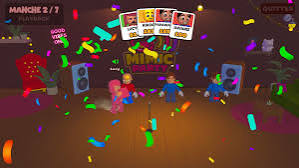
Party games benefit from presentation that makes situations easy to understand. Clear visual feedback is particularly important when multiple players are moving around the same environment.
Mimic Party's entertainment value is strengthened when players can quickly recognize characters, actions, and changes in the game state.
Why Presentation Matters
A party game does not necessarily need realistic graphics to be enjoyable. Instead, its visual style should support readability and personality.
Strong presentation can help players:
- Understand objectives
- Recognize other players
- Follow fast-moving situations
- Identify important events
- Enjoy humorous moments
Sound design can also contribute to the atmosphere. Distinctive audio cues can make actions easier to notice and help create tension during important moments.
For a social game, these details are more significant than they might initially appear.
8. Replayability and Long-Term Entertainment
One of the biggest questions for any party game is whether it remains entertaining after the novelty wears off.
Mimic Party benefits from the fact that human players provide much of the variety. Even if players understand the basic mechanics, their decisions can change from one session to another.
A group of players may develop completely different strategies after several sessions.
What Creates Replay Value?
Several factors contribute to replayability:
- Different player personalities
- Changing strategies
- Unpredictable decisions
- Competitive rivalries
- Learning from previous matches
- Playing with different groups
- Improving personal skill
The strongest replay value comes when players begin creating their own stories around the game.
A particular round might become memorable because someone made an unexpected decision, successfully fooled another player, or completely changed their strategy at the last moment.
Overall Experience
Mimic Party works best when approached as a social game rather than a purely competitive skill test. Its strongest moments are often created by interactions between players rather than by a single mechanical system.
The game rewards awareness, experimentation, and adaptability. Players who enjoy trying to understand what others are thinking may find considerably more depth than they initially expect.
10. Rating and Final Verdict
Mimic Party offers a straightforward but flexible multiplayer concept. Its greatest strength is the unpredictability created when real players interact, imitate one another, change strategies, and attempt to anticipate their opponents.
It is particularly suited to groups looking for a casual experience that can generate funny, competitive, and memorable situations without requiring a huge investment of time.
Rating
CategoryRatingGameplay9/10Accessibility9.2/10Multiplayer Fun9.5/10Strategy8.8/10Replay Value9.3/10Social Interaction9.5/10Presentation8.7/10Learning Curve9/10Overall9.1/10
The biggest attraction of Mimic Party is its ability to transform simple mechanics into unpredictable social situations. Players are not simply responding to programmed behavior; they are responding to other people who can learn, adapt, deceive, and surprise them.
That makes every group slightly different.
Conclusion
Mimic Party demonstrates why party games do not need complicated mechanics to provide meaningful entertainment. By combining observation, imitation, timing, social interaction, and unpredictable player behavior, the game creates an experience that can be easy to learn while still offering room for strategic improvement.
Beginners should concentrate on understanding the objectives, observing other players, and learning from mistakes. As their experience grows, they can experiment with different approaches, avoid predictable patterns, and begin anticipating how opponents might react.
The game is especially appealing for players who enjoy multiplayer experiences where the people around them become part of the gameplay itself. A familiar group can develop rivalries, strategies, jokes, and unexpected traditions that give each session its own personality.