WARDOGS Tips: What Every New Player Should Learn Before Their Next Match
Starting a new game is rarely difficult because the controls are complicated. The harder part is understanding what the game actually expects you to pay attention to. WARDOGS can create that problem for new players because the first few matches can make combat look much simpler than it really is. You see an enemy, aim, shoot, move, and repeat. After a few bad encounters, however, it becomes clear that winning fights is not just about landing more shots. The players who improve are usually the ones who start understanding what they should be doing before the fight even begins.
That is why the best WARDOGS tips are not necessarily complicated tricks. They are small changes in the way you approach a match. Learning when to move, when to stop, when to take a fight, and when to leave can make a much bigger difference than trying to force advanced mechanics immediately. You also need to become comfortable with the idea that not every mistake should be solved by becoming more aggressive. Sometimes the correct response is simply to create distance, gather information, and try again from a better position.
If you are still learning WARDOGS, the goal should not be to play perfectly. Your first objective is to become predictable to yourself. You want to understand how you react under pressure, which situations cause you to panic, where you usually overextend, and which decisions repeatedly get you eliminated. Once those patterns become obvious, improving becomes much easier because you are no longer trying to fix everything at once.
Start by Learning the Rhythm of a Match
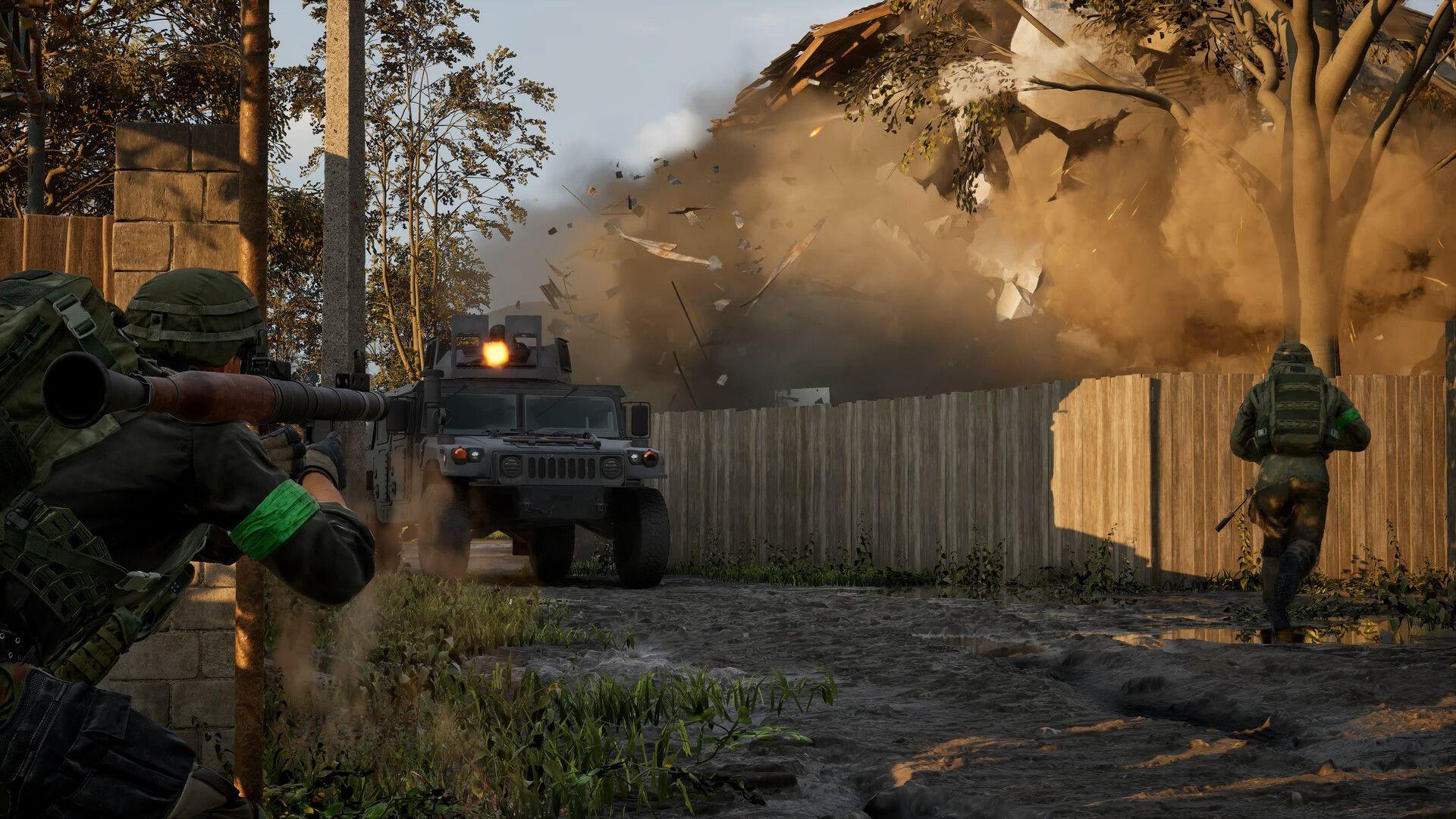
Before worrying about advanced combat techniques, spend a few matches learning the general rhythm of WARDOGS. Pay attention to what normally happens during the opening moments, how quickly players begin encountering one another, and how the intensity changes as the match develops. You do not need to memorize every location immediately. Instead, try to understand when the game tends to be quiet and when you should expect more pressure.
This matters because many new players treat every moment with the same level of urgency. They rush when there is no reason to rush and panic when something unexpected happens. Once you recognize the natural rhythm of a match, you can begin making decisions with more confidence. A quiet moment becomes an opportunity to prepare rather than a reason to sprint forward, while a dangerous moment becomes something you expect rather than something that catches you completely off guard.
Your first several matches should therefore be treated as information-gathering sessions. Notice where you usually encounter enemies. Remember which routes leave you exposed. Pay attention to locations where you repeatedly get trapped or attacked from unexpected angles. These observations are more valuable than simply looking at your final elimination count because they tell you exactly what needs to change.
One of the easiest mistakes is trying to improve everything simultaneously. A player notices poor aim, bad positioning, slow reactions, weak awareness, and questionable movement, then tries to fix all of them in the next match. That usually creates even more hesitation. Pick one problem at a time. If positioning is your biggest weakness, spend the next few matches thinking primarily about where you are standing rather than obsessing over your accuracy.
Stop Running Everywhere
Movement feels productive, especially when you are new. If you are constantly moving, you feel like you are doing something useful. In reality, unnecessary movement can create problems because it makes your position harder to control and can expose you to threats that you would have avoided by simply waiting.
A useful habit is to ask yourself why you are moving before you move. Are you going toward an objective? Changing your angle? Escaping danger? Looking for better cover? Chasing an opponent? If you cannot answer the question, there is a good chance the movement is unnecessary.
This does not mean standing still for long periods. WARDOGS is not a game where passive play automatically keeps you alive. The point is to make movement purposeful. Moving from one piece of cover to another because your current position has become compromised is very different from running across an open area simply because you feel that you should be moving.
New players also tend to underestimate how much information they lose while moving. When you are constantly changing direction, it becomes harder to monitor what is happening around you. You may pass useful visual information without noticing it. You may also enter a fight before you have properly understood where the threat is coming from.
Try introducing short pauses into your movement. Reach a position, look around, understand what you can see, and then decide where to go next. Those pauses may initially feel slow, but they can teach you something extremely important: good movement is often about controlling when you are exposed rather than maximizing how quickly you travel.
Learn to Use Cover Before You Learn to Chase
Cover should become one of your first priorities in WARDOGS. Many new players see an enemy and immediately think about how to get a better angle on them. Experienced players often think about the opposite question first: where can I stand so that the enemy has fewer ways to punish me?
That small change in perspective can transform your fights. Instead of moving toward an enemy through open space, look for positions that allow you to expose only part of yourself while keeping an escape route available. You are not trying to become impossible to hit. You are trying to make the enemy work harder to damage you than you have to work to damage them.
Cover is also valuable because it gives you time. If you take damage or lose track of an enemy, you can use that moment to reset. You can reload, change your position, regain visual information, or simply stop yourself from making another rushed decision. Open ground gives you fewer opportunities to recover once something goes wrong.
Another common mistake is using the same piece of cover for too long. Once an opponent knows where you are, the advantage of that position begins to decrease. If you repeatedly peek from exactly the same location, you are making yourself easier to predict. After an engagement, consider changing your angle rather than immediately repeating the same action.
The goal is not to hide behind cover for the entire match. Good cover allows you to choose when you become visible. That control is much more valuable than simply having something between you and an enemy.
Do Not Take Every Fight You See
This is one of the most useful lessons for new WARDOGS players. Seeing an enemy does not automatically mean you should attack them.
Sometimes you have a good position, enough information, and a realistic chance of winning. Sometimes you have none of those things. If you are in the open, low on resources, unsure how many opponents are nearby, or approaching from an awkward angle, initiating a fight may simply create unnecessary risk.
Ask yourself three questions before committing whenever you have enough time to do so. First, do I know where the enemy is? Second, do I know what I can use for protection? Third, if this fight becomes unfavorable, do I have somewhere to go?
You do not need three perfect answers every time. But if all three answers are effectively “no,” slowing down is usually better than immediately attacking.
This is particularly important when you are tempted to chase a damaged opponent. Low health creates a powerful psychological trigger. You know the enemy is vulnerable, so continuing the attack feels like the obvious choice. Yet the weakened opponent may be moving toward teammates, better cover, or a position where you become exposed.
A kill is valuable, but the position you occupy afterward matters too. If eliminating one enemy leaves you completely exposed to the next threat, the exchange may not have produced the advantage you expected.
Your First Shot Does Not Need to Be Your Last Decision
New players often treat the beginning of a gunfight as if it locks them into one course of action. Once they shoot, they feel committed. If the enemy survives, they keep shooting. If the enemy moves away, they chase. If the player's own health drops, they continue because they have already started the fight.
Try to break that habit.
The moment you fire the first shot, the situation has changed. Both players now know something that they did not know a second earlier. Your position may have been revealed. The enemy may move differently. Another opponent may become aware of the engagement. You need to reassess rather than blindly continue the original plan.
This is one of the simplest ways to make your gameplay more adaptable. Treat every major action as a new information point. You fired. What happened? The enemy moved. Where did they go? You took damage. What does that mean for your position? Another player appeared. Does the original target still matter?
Good players are not necessarily those who make the perfect plan before combat. They are often the ones who can change the plan quickly when reality disagrees with them.
Stop Chasing Players Around Corners
Chasing is one of the easiest traps to fall into.
An opponent takes damage and retreats behind a corner. You know they are weak. You follow them immediately because you want the elimination. The problem is that you cannot see what is waiting on the other side.
The enemy may be genuinely escaping. They may also be leading you into a position where you lose your advantage. The moment you move around the corner, your previous information becomes incomplete. You no longer know exactly what is ahead of you, while the retreating player may have already prepared for your arrival.
When chasing, slow down at the final moment before entering an unseen area. Check your surroundings if possible and think about alternative routes. You may still decide to continue, but the difference is that you are making the decision with awareness rather than momentum.
This habit is especially useful because it attacks a psychological weakness rather than a mechanical one. You are not losing because you cannot aim. You are losing because the desire to finish the fight has temporarily become stronger than your awareness of the battlefield.
Learning to recognize that feeling is a major step forward.
Aim Comes After Positioning
Improving aim is useful, but many players spend too much time thinking about aim when their real problem is positioning.
Imagine two players with identical accuracy. One is standing in an exposed area with several possible angles of attack. The other is positioned near cover with a clear view of the opponent and an escape route. The second player has created an easier situation before either player even fires.
That is why you should not automatically blame your aim after losing a fight. Ask what happened before the shooting started. Did you expose yourself unnecessarily? Did you begin the fight from a poor angle? Did you move too far forward? Did you allow the opponent to attack while you were still repositioning?
Sometimes the answer really is that you missed too many shots. But if the same pattern keeps happening, positioning may be the more important problem.
Good positioning also makes aiming easier because you have more time to focus on the target. When you are constantly worried about attacks from multiple directions, your attention becomes divided. When your position reduces the number of threats you need to monitor, your mechanical execution naturally becomes more consistent.
So when practicing WARDOGS, do not make every match an aim-training exercise. Spend some matches deliberately trying to survive longer through better positioning. You may discover that your accuracy improves simply because you are creating better opportunities to use it.
Learn the Difference Between Pressure and Panic
Combat pressure is useful. Panic is not.
Pressure means you understand that the situation is dangerous and respond by processing information more carefully. Panic means you begin making decisions simply to escape the feeling of being under threat.
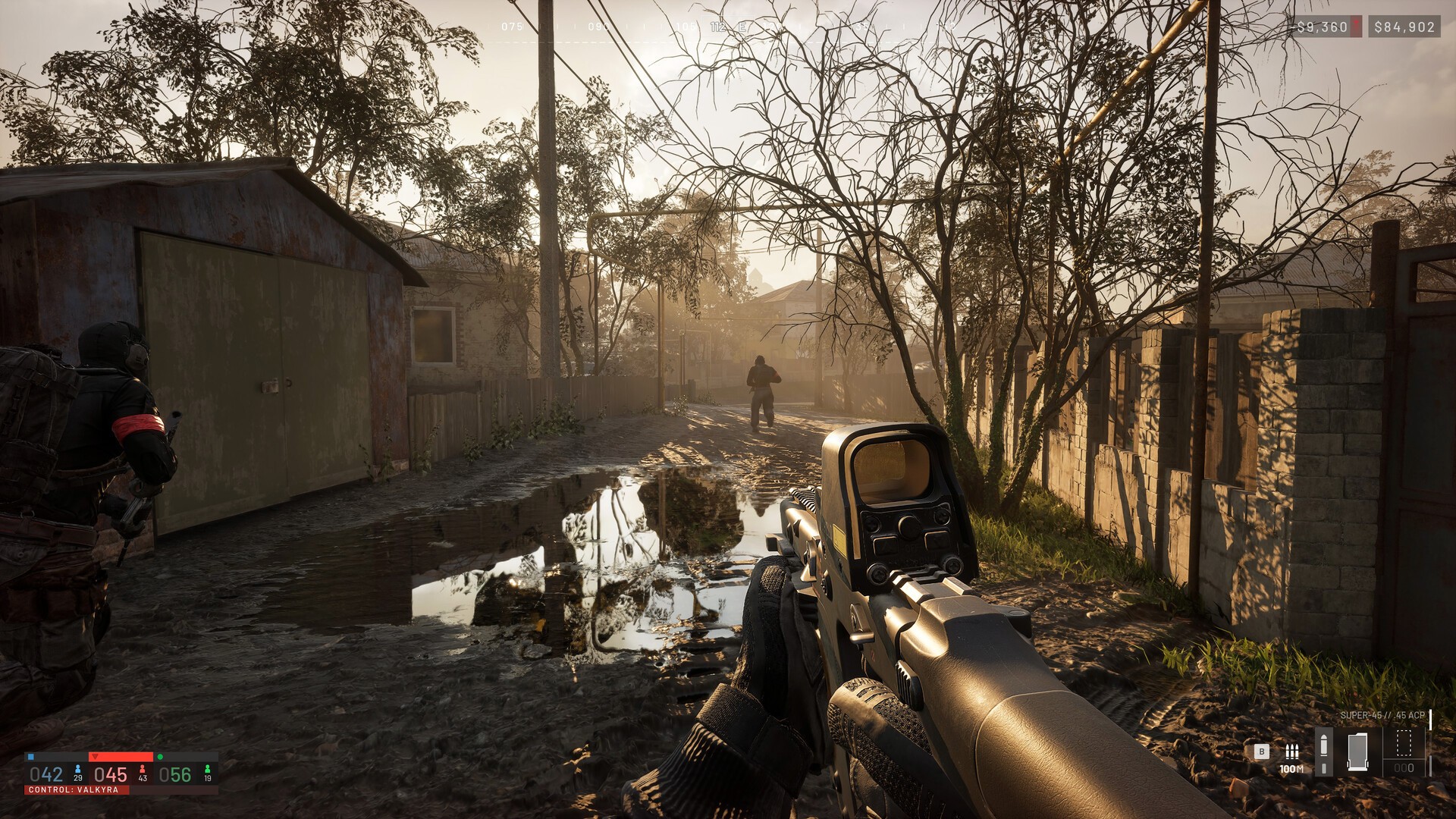
The difference can be seen in movement. A player under pressure may move behind cover, reload, check an angle, and choose a new route. A panicking player may sprint randomly, expose themselves repeatedly, reload in unsafe positions, or chase an opponent without knowing why.
If you notice yourself panicking, simplify your decision-making. Do not try to solve the entire fight at once. Find cover first. Establish where the immediate threat is. Then decide what your next action should be.
This simple sequence can prevent many unnecessary deaths.
You can also practice this intentionally. When you are in a difficult situation, resist the instinct to immediately perform the fastest possible action. Give yourself a moment to identify the most urgent problem. Sometimes that moment feels uncomfortable because the game seems to demand instant movement. But many situations are less urgent than they initially appear.
Calm decision-making does not mean playing slowly. It means refusing to let the enemy decide your actions for you.
Know When a Fight Has Become Bad
One of the hardest skills to learn is recognizing when a fight has changed from favorable to unfavorable.
At the beginning, you may have had the better position. Then you take unexpected damage. Your opponent moves behind cover. Another angle opens. Your escape route becomes less reliable. Suddenly the situation is no longer the same fight you started.
New players often continue because they remember the original advantage. They think, “I was winning a second ago.” That is irrelevant if the situation has changed.
Instead, evaluate the fight again. Do you still have a useful position? Do you still know where the enemy is? Can you safely continue? If the answers have changed, your decision should change too.
This is particularly important because WARDOGS rewards players who can abandon a bad situation without turning it into an emotional failure. Leaving a fight does not erase the advantage you had earlier. It simply acknowledges that the conditions are different now.
Sometimes the smartest play is to survive and create another opportunity.
Use Retreats to Reset, Not Just Escape
Retreating should not always mean running as far away as possible. A controlled retreat can be much more useful.
If you move back to a position that gives you better cover, clearer visibility, or more options, you have effectively reset the fight. The enemy may still be interested in chasing you, but they now have to enter the space you chose.
This reverses the momentum.
Instead of allowing an opponent to dictate the engagement, you create a new situation where your position works in your favor. Even if you eventually return to the same fight, you are no longer fighting under exactly the same conditions.
The key is knowing when to stop retreating. If you continually give ground without a plan, you can eventually lose access to useful areas. Think of retreat as repositioning rather than surrendering. Move until you have solved the immediate problem, then reassess.
A good retreat often feels boring compared with an aggressive push. That is precisely why new players struggle with it. The reward is not immediate excitement. The reward is another chance to make the right decision.
Pay Attention to Why You Died
Your death is one of the most useful sources of information in WARDOGS, but only if you analyze it correctly.
Do not stop at “I got outplayed” or “my aim was bad.” Those explanations are too vague to help. Ask what actually happened during the ten or twenty seconds before the elimination.
Were you moving through an exposed area? Did you know where the opponent was? Did you hear or notice anything before the attack? Were you chasing? Did you stay in one position too long? Did you continue fighting after losing your advantage? Did you fail to account for another possible angle?
The point is not to blame yourself. It is to identify a repeatable mistake.
If you die the same way five times, you have found something valuable. Maybe you repeatedly chase opponents around corners. Maybe you always reload in exposed areas. Maybe you move too far forward after winning the first exchange. Once you identify the pattern, you can deliberately change it in the next match.
This approach turns losing into a training system.
Instead of measuring improvement only through wins, measure it through mistakes that disappear. If you used to chase every weak opponent and now you stop yourself half the time, that is progress. If you previously died in open areas constantly and now you automatically look for cover, that is progress too.
Eventually those conscious corrections become instinctive.
Build Habits Before Chasing Advanced Techniques
There is always a temptation to look for advanced strategies before mastering basic habits. Players want the perfect loadout, the best route, the strongest weapon combination, or some complicated technique that experienced players use.
Those things can matter, but they are much less valuable when your fundamentals are inconsistent.
A player who constantly overextends will not suddenly become strong because they copied an advanced setup. A player who ignores positioning will still struggle even with better equipment. A player who panics under pressure will continue making mistakes regardless of how much information they have memorized.
Focus first on a few habits that can be repeated every match. Check your surroundings before committing. Use cover intelligently. Avoid unnecessary chases. Reassess after taking damage. Keep an escape route in mind. Those habits may sound simple, but they form the foundation of almost everything more advanced.
Once they become automatic, you can start experimenting with more aggressive strategies without completely losing control of your gameplay.
That progression is much more reliable than trying to imitate high-level play immediately.
Give Yourself a Simple Pre-Fight Checklist
You do not need to literally say these questions out loud during a match, but having a mental checklist can help while learning.
Before committing to a fight, think about your position, your information, and your escape route. If you know where the enemy is but have nowhere safe to move, the fight may be dangerous. If you have excellent cover but no idea where the enemy actually is, rushing forward may be premature. If you have a strong angle and a safe retreat available, the situation is much more favorable.
During the fight, pay attention to changes. Did you take more damage than expected? Did the enemy disappear from sight? Did another threat appear? Did you lose access to your original cover?
After the fight, do not immediately move on autopilot. Check whether the position is still safe. A successful engagement can create its own danger because players become relaxed immediately after winning.
The checklist becomes shorter with experience because you stop consciously asking every question. Eventually, you simply look at a situation and instinctively recognize whether it feels stable or dangerous.
That is one of the clearest signs that you are learning the game.
Do Not Confuse Confidence With Overconfidence
Confidence is important because hesitation can be just as damaging as reckless aggression. If you always assume you are going to lose, you will avoid opportunities that you could have taken.
But confidence becomes a problem when previous success causes you to stop evaluating the situation.
Winning one fight does not mean the next fight is safe. Eliminating an opponent does not mean there are no other threats nearby. Finding a strong position does not mean it will remain strong forever.
Try to separate confidence in your ability from confidence in the situation. You can trust yourself to handle a fight without assuming that every fight is favorable.
That distinction allows you to play aggressively without becoming reckless.
Good players are often willing to take risks. The difference is that their risks are usually deliberate. They understand what they are giving up and what they hope to gain.
Practice One Skill Per Match
If you want to improve quickly, make your practice sessions more specific.
One match can focus on positioning. Instead of worrying about your final score, try to avoid unnecessary exposure. Another match can focus on movement, where your goal is to stop running without a clear reason. A different match can focus on disengagement, where you deliberately practice leaving fights once the situation becomes unfavorable.
This approach may feel strange because you might temporarily care less about winning. But it gives your brain a clear problem to solve.
Trying to improve everything at once makes it difficult to understand what actually helped. Focusing on one behavior creates a direct connection between the decision and the result.
After several matches, combine the habits. Once you are comfortable with positioning, add better movement. Once movement becomes natural, work on combat decisions. Eventually these skills begin supporting one another.
The result is not a collection of isolated tricks. It is a more complete understanding of how you want to play.
Final Thoughts
The biggest mistake a new WARDOGS player can make is believing that improvement comes primarily from becoming faster or more aggressive. Mechanical skill matters, but it becomes much more effective when it is supported by awareness. Knowing where to stand, understanding when to move, recognizing when to disengage, and learning from repeated mistakes can completely change the way a match feels.
The game becomes easier to understand once you stop treating every encounter as an isolated fight. A fight is connected to the position you chose beforehand, the information you gathered, the route you took, and the options you left yourself afterward. Even a missed shot can matter less if your position is strong enough to give you another chance. Likewise, perfect accuracy cannot always save a player who has willingly placed themselves in a terrible situation.
That is why the best WARDOGS players are not simply the ones who know how to attack. They know how to prepare.
They recognize danger earlier. They move with a reason. They know when to pressure an opponent and when to let them go. They understand that retreating can create a better fight rather than ending one. Most importantly, they learn from what happened instead of repeating the same decision and hoping for a different result.
If you are new to WARDOGS, do not worry about mastering everything immediately. Start with the fundamentals: watch the battlefield, use cover, stop unnecessary chasing, think before committing, and learn something from every death. Once those habits become natural, the rest of the game has a much stronger foundation to build on.
WARDOGS rewards players who learn to see more than the enemy directly in front of them. The real skill is understanding everything happening around that enemy — the position, the space, the escape route, the risk, and the next few seconds.
Once you start seeing those things, you are no longer simply reacting to the match.
You are learning how to play it.