





"Job Simulator" is widely known as a fun, slapstick VR game where robots recreate human jobs with comically inaccurate logic. But beyond its humor, the game becomes a fascinating study of how players react when given total creative agency inside a structured environment. The contradiction between "work" and "freedom" turns Job Simulator into a psychological playground—inviting experimentation, failure, rebellion, and emergent storytelling. This article explores that deeper phenomenon.
1. The Concept of Work Reimagined
Job Simulator takes traditional jobs—office worker, mechanic, chef, clerk—and reconstructs them with absurd exaggeration. This reimagining is not just comedic but philosophical: it highlights what people remember about work and what the future might misunderstand.
The robots' misunderstanding of human labor creates a sandbox that removes pressure and injects curiosity. Players enter expected tasks but quickly gravitate toward breaking the rules because VR makes consequences non-existent.
This shift from obligation to opportunity is the foundation of the game’s psychological appeal.
2. Why Player Agency Becomes the Core Mechanic
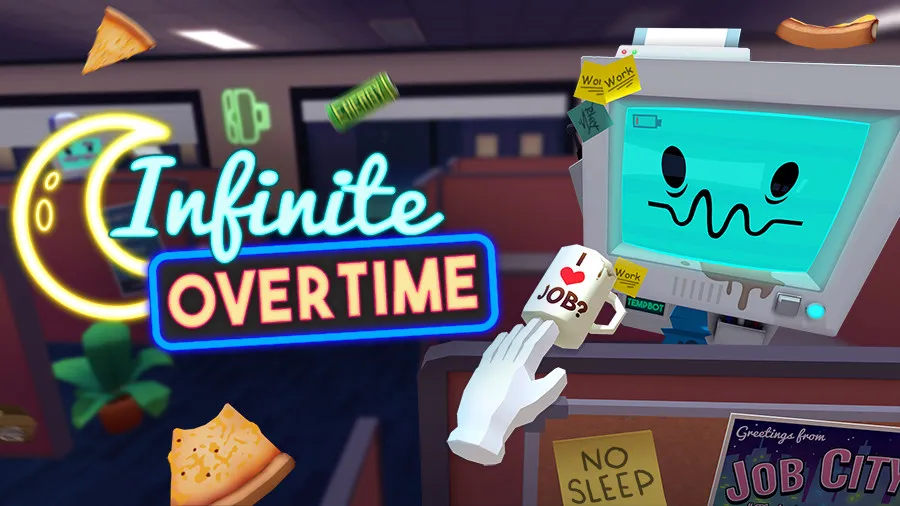
Although each job has objectives, the real gameplay emerges when players ignore them. The environment is built to react in tactile, surprising ways. Every object can be picked up, thrown, blended, microwaved, stapled, set on fire, or reconfigured.
This total agency transforms tasks into tools for creativity. The player becomes not a worker but a chaotic artist using everyday objects as expressive material.
Freedom becomes the reward, not efficiency.
Key elements of agency
- No punishment systems
- Physics-based interaction encourages improvisation
- Tasks act as suggestions rather than rules
- The robotics narrator rewards creativity with humorous reactions
3. Humor as a Motivator for Experimentation
Humor isn’t just a layer—it’s the engine driving player actions. When players discover something absurd happens—like cooking a cactus or using a fire extinguisher on everything—they are motivated to test more interactions.
The comedic feedback loop keeps players exploring rather than completing tasks. They become disruptors rather than employees, flipping the power dynamic of traditional work.
This encourages a playful mindset rarely found in job-themed games, which typically focus on accuracy or realism.
Types of humor used
- Exaggeration
- Misinterpretation of human culture by robots
- Physical comedy
- Unexpected object reactions
- Over-the-top voice acting
4. The Psychology Behind Breaking Rules in VR
VR intensifies immersion, making the urge to break rules stronger. Unlike real life, VR offers consequences without risk. Job Simulator’s design acknowledges this by providing:
- Enclosed spaces
- Object-rich environments
- Predictable physics
- Clear affordances (every object invites interaction)
Players quickly realize the simulation encourages chaos more than obedience. This creates a psychological release where mundane tasks become satisfying opportunities to test boundaries.
Many players report that intentionally messing up tasks is more enjoyable than doing them correctly.
5. The Beauty of Controlled Chaos
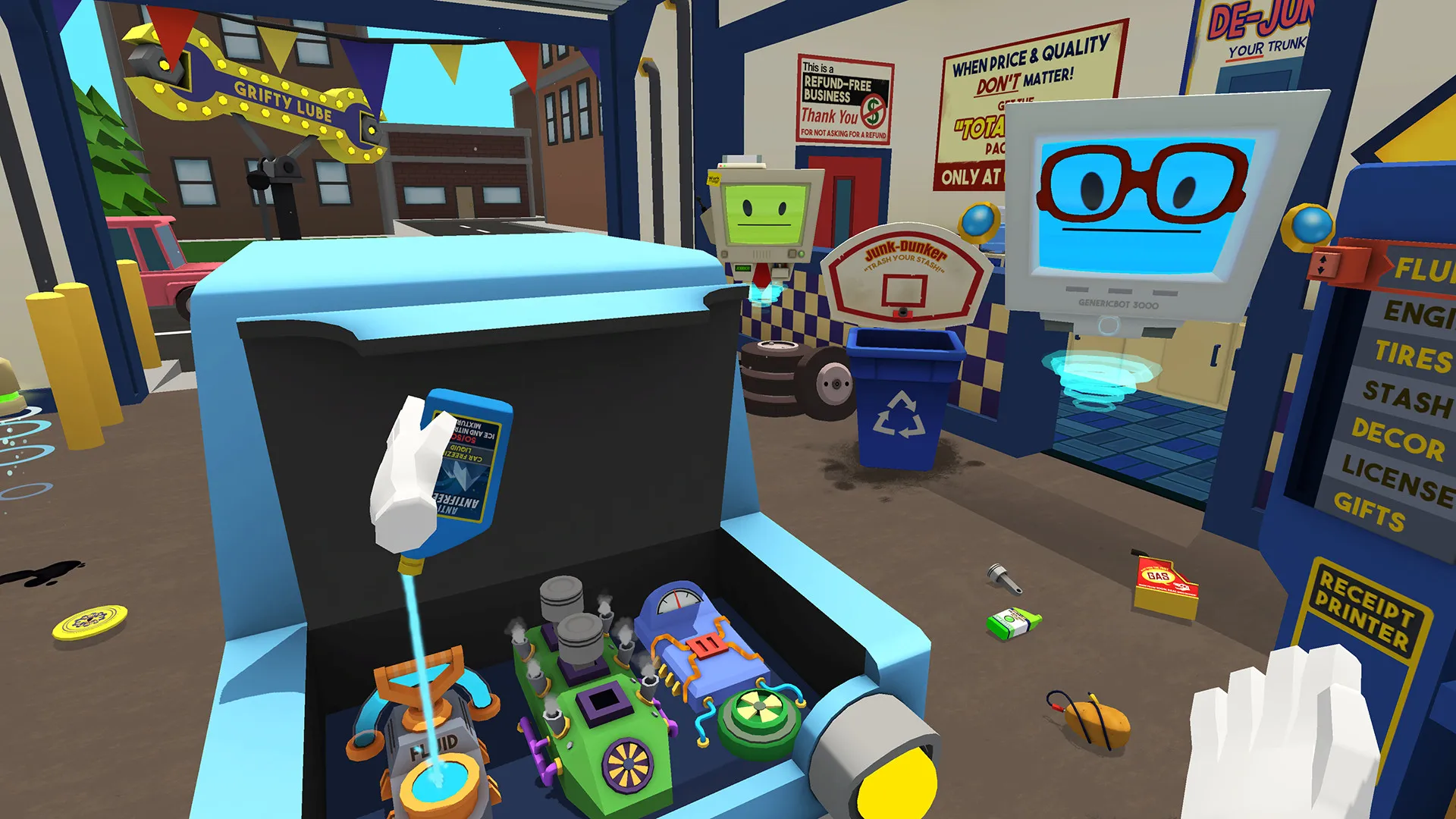
Job Simulator creates chaos, but it is carefully structured. Although nearly everything can be manipulated, nothing breaks the game. Objects respawn, physics reset, and tasks can always continue regardless of how destructive the player becomes.
This balance ensures that chaos is fun—not frustrating.
It also creates a safe environment to explore behaviors players would not attempt in real life: trashing an office, throwing hotdogs at customers, or filling a car with random junk.
Why controlled chaos works
- Predictability maintains immersion
- Indestructibility keeps players confident
- Fun surprises reward experimentation
- Simulation never punishes creativity
6. Emergent Storytelling Through Player Choices
The game includes scripted objectives, but the real narrative occurs through what players choose to do. The story transforms from a linear job simulation into a personal comedy adventure shaped by improvisation.
A player might become:
- A chaotic chef who burns every dish
- A mechanic who uses fruit instead of engine parts
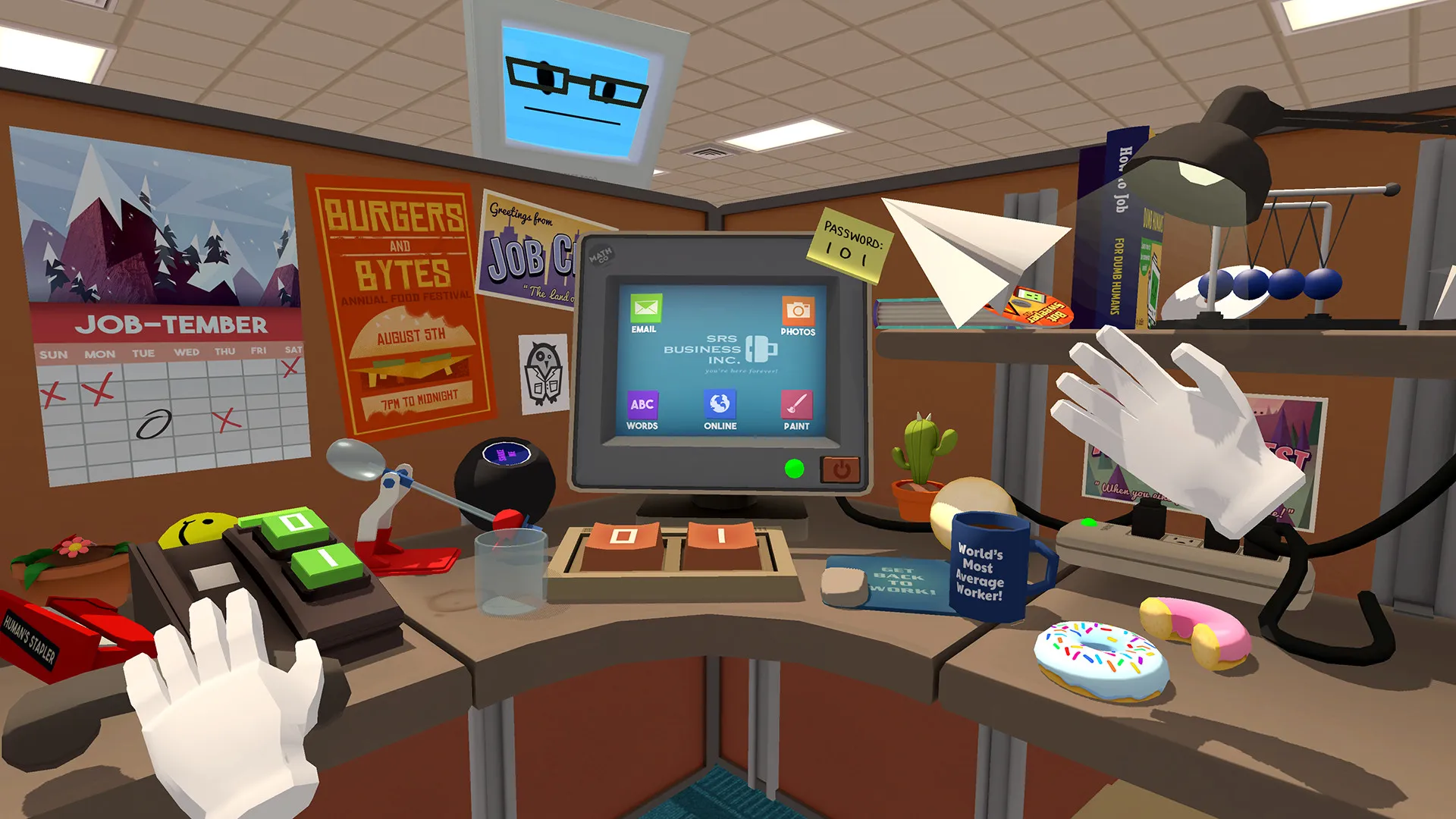
- An office worker who throws paper airplanes at coworkers
This emergent storytelling gives Job Simulator the replayability it would otherwise lack.
VR amplifies the experience by making actions feel intentional and physical, turning simple gestures into memorable stories.
7. How Job Simulator Influences Later VR Game Design
Many VR developers cite Job Simulator as foundational. Its emphasis on physics, agency, and comedic freedom shaped the direction of VR content that followed, including games like:
- Vacation Simulator
- Trover Saves the Universe
- The Lab
- I Expect You to Die
- Rick and Morty: Virtual Rick-ality
Developers learned that VR thrives when players can behave unexpectedly. Job Simulator proved that humor + tactile freedom is a formula players love.
Design principles it popularized
- 1:1 hand interaction
- Physics-driven gameplay
- Encouraging experimentation
- Non-linear objectives
- Player-driven comedy
8. The Hidden Depth of Mundane Spaces
It might seem odd that a game about simple jobs feels rich and engaging, but the secret lies in how VR elevates these spaces. A small office becomes a playground because everything can be grabbed, thrown, stacked, or destroyed.
Players are not exploring giant worlds—they are exploring the possibilities of objects.
This micro-scale depth teaches an important VR lesson: realism isn’t required; reactivity is.
VR worlds don’t need to be large—they need to be alive.
9. Accessibility, Comfort, and Why the Game Works for Everyone
Job Simulator is often recommended as a beginner VR game because it:
- Requires minimal movement
- Has simple mechanics
- Provides intuitive interactions
- Never overwhelms the player
- Keeps humor and pacing comfortable
- Offers short, digestible sessions
The lack of locomotion reduces motion sickness, making it accessible to new users. Its clear visual designs and exaggerated indicators make interactions obvious.
This broad accessibility helped VR reach a larger, more casual audience.
10. The Deeper Message: Work Is What We Make of It
Behind the silliness, Job Simulator offers a subtle social commentary. Robots admire human work but misunderstand it, highlighting how much of our “work culture” is arbitrary, performative, or unnecessarily stressful.
When players treat tasks chaotically, the game ironically feels more joyful and creative than the real jobs it parodies.
Job Simulator suggests that work becomes meaningful when infused with curiosity, play, and personal agency—not obligation.
Themes beneath the surface
- Work as a cultural artifact
- Humans redefining productivity
- Robots misrepresenting history
- The absurdity of labor systems
- Creativity as a form of rebellion
Conclusion
Job Simulator may disguise itself as a silly VR game about parody jobs, but beneath the humor is an expertly designed exploration of player agency, rule-breaking psychology, and emergent storytelling. It shows how VR transforms mundane tasks into fertile ground for creativity, expression, and laughter. By giving players total freedom, it encourages chaos in a structured world—revealing how people behave when work no longer restricts them. In the end, Job Simulator isn't about jobs at all; it's about discovering joy in the unexpected and the power of play in shaping our experiences.